

Deciding between a pellet, charcoal, or offset smoker comes down to a single trade-off: how much flavor and control you want versus how much time and attention you’re willing to give. All three make great barbecue. They just get there in very different ways. This guide breaks down how each one works, what it’s like to live with, and who each is best for — with the Smokehaus Pit Co. offset smoker as a real-world example of the traditional approach.
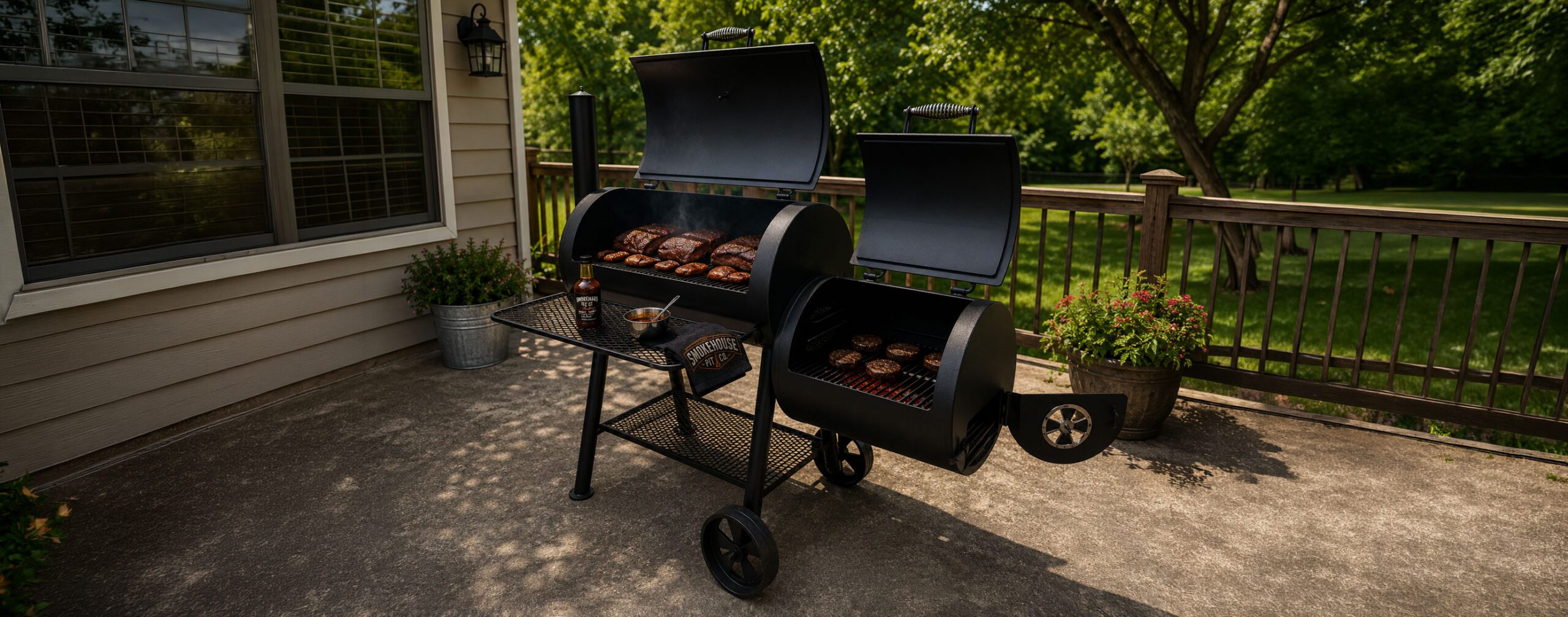
Offset smoker. The firebox sits to the side of the cooking chamber. You burn wood or charcoal in the firebox, and the heat and smoke travel across the chamber, cooking the food by indirect heat. You control the fire by hand, feeding it and adjusting vents through the cook. This is the classic “stick burner” that Texas barbecue is built on.
Pellet smoker. A pellet grill runs on electricity and burns compressed hardwood pellets. Pellets feed automatically from a hopper into a burn pot, an igniter lights them, and a fan circulates heat and smoke while a built-in controller holds your set temperature. You set a number, like an oven, and walk away.
Charcoal smoker. Charcoal smokers come in several shapes — upright drums, bullet-style water smokers, and ceramic kamados. In a drum smoker, charcoal burns in a basket at the bottom, adjustable vents control airflow and temperature, and wood chunks add smoke while the food cooks on grates above.
If deep, traditional smoke flavor is your top priority, this is the most important section.
Across barbecue sources, the consensus is consistent: offset smokers win on flavor, charcoal comes next, and pellet grills produce a milder, cleaner smoke. Offset smokers deliver a rich, robust smoke through real firewood and hands-on fire management, while pellet smokers make a lighter, more subtle smoke with less of the heavy wood punch. None of this means a pellet grill makes bad food — it makes excellent, consistent food — but the smoke profile is gentler.
It helps to understand where barbecue flavor comes from, because it explains why the type of smoker matters. Most of the smokiness you taste doesn’t come from the pink “smoke ring” — that ring is a separate chemical reaction between the meat’s pigment and gases like nitric oxide produced when wood or charcoal burns, and it doesn’t actually carry much flavor. The real flavor lives in the bark — the dark, seasoned crust on the surface — and in the compounds that settle there from the fire.
What separates a great fire from a mediocre one is the quality of the smoke itself. Thick white smoke is mostly water vapor and unburned particles and tends to leave food bitter; the smoke you want is thin and slightly blue, which signals clean, efficient combustion. This is exactly where hands-on smokers reward attention: managing a live fire on an offset lets an experienced cook chase that clean burn, while a pellet grill produces a consistent but gentler smoke automatically. It’s the same trade-off — control versus convenience — showing up at the chemical level.
Here the ranking flips.
Pellet grills are the easiest to run: set a digital temperature and the auger and fan keep it there with almost no monitoring, which is why they’re ideal for beginners and busy cooks. Offset smokers sit at the other end — they require skill and patience, longer setup, and constant attention to hold a steady temperature by managing the fire, which makes them challenging for newcomers. Charcoal smokers land in between: more hands-on than pellet, more forgiving than a full stick burner.
The way to read that isn’t “offset is worse.” It’s that the offset’s hands-on fire management is the same thing that produces its flavor. The effort and the reward are the same feature.
There are two costs to weigh — what you pay for the smoker and what you feed it.
Upfront, a basic offset or charcoal smoker is often cheaper than a comparable pellet grill; economy offsets can be found as low as $300, while pellet grills tend to start around $400 and climb. That said, cheap offsets are usually thin steel — heavy-gauge builds cost more (see Tree Frogs’ How to Choose a BBQ Pit Smoker: A Buyer’s Guide for Backyard Pitmasters).
Fuel runs the other direction over time. A 20-pound bag of charcoal is usually cheaper than the same weight of pellets and gives longer cook time per pound, and pellet grills also add electricity and mechanical parts that can need maintenance. As a rough guide, a pellet grill burns roughly 1 to 3 pounds of pellets per hour.
A few practical points that decide a lot of purchases:
Whatever you buy, regular cleaning protects both the flavor of your food and the life of the smoker. Built-up grease, ash, soot, and creosote can taint the taste and lead to flare-ups or premature wear. What that upkeep looks like differs by type:
This is where heavy-gauge steel pays off twice: it holds heat better during a cook, and thicker walls take far longer to rust through than thin budget metal. It’s also why warranties are worth reading. The Smokehaus BBQ Pit, for instance, carries a limited lifetime warranty against burn-out on the cooking chamber and firebox for the original residential purchaser — though, like most steel smokers, rust from moisture is the owner’s responsibility, not a warranty item.
There’s no universal winner — only the right fit for how you like to cook.
Choose a pellet smoker if you want set-and-forget convenience, steady results with minimal monitoring, and you don’t mind a milder smoke, a higher entry price, or needing an outlet. Best for beginners and busy schedules.
Choose a charcoal smoker if you want strong flavor and versatility on a budget, and you’re happy to manage vents and coals. A good middle path, and often the cheapest way in.
Choose an offset smoker if authentic, heavy wood-fired flavor and the hands-on barbecue experience are the whole point, and you’re willing to tend a fire for hours. Best once you’re comfortable with fire management — and the choice most serious Texas pitmasters make.
If the offset column is calling to you, the Smokehaus Pit Co. Smoker/Grill is a working example of a well-built one:
You can see it on the Smokehaus Pit Co. Smoker/Grill product page, or in person at Tree Frogs showrooms across Texas and Arizona.
Is a pellet or offset smoker better for beginners?
It depends on how you want to spend the learning curve. A pellet smoker asks almost nothing of you on day one — set a temperature and cook — so the first results come easy. An offset teaches you to build and hold a clean fire, which is the real skill in barbecue and the part that takes the most practice. If you want to learn fire but not all at once, a charcoal smoker is a sensible middle step: you manage vents and coals without babysitting a full stick burner.
Which smoker gives the most authentic barbecue flavor?
The offset, because it burns real wood and lets you chase the clean, thin-blue smoke that lays down the most flavor. Charcoal comes close, and you can narrow the gap further by adding wood chunks to the coals. Pellet grills give a lighter, more consistent smoke — plenty for most cooks, just without the heavy wood punch a stick burner delivers.
Do pellet grills need electricity?
Yes — the auger, fan, and controller all run on power, which has two practical consequences. You’ll need a weatherproof outdoor outlet within reach, and a power cut mid-cook will stop the fire, so it’s worth knowing where your outlet sits before you buy. Offset and charcoal smokers sidestep this entirely and can cook anywhere.
Is charcoal or pellet cheaper to run?
Charcoal usually wins on fuel, but it’s worth thinking in total cost. Charcoal and wood are inexpensive and store easily, while pellets cost more per cook and a pellet grill also draws electricity and has moving parts that can eventually need service. An offset can burn wood you split or source locally, lowering running costs further. Weigh those savings against the convenience a pellet grill buys you.
Can one smoker both smoke and grill?
Some do. A true offset like the Smokehaus BBQ Pit uses its firebox as a charcoal or wood-fired grill for direct searing while the main chamber smokes low and slow. Charcoal smokers and kamados also grill well over their coals. Pellet grills are built mainly for smoking and steady roasting, so they’re less suited to high-heat direct searing.
How long will an offset smoker last?
A lifetime on heavy gauge (¼”) pits — but not all offsets age the same. On thin-steel budget pits, the firebox is the first part to go: it takes the most heat and eventually warps or burns through, which is exactly why the chamber-and-firebox burn-out warranty on a heavy-gauge pit like the Smokehaus BBQ Pit matters. Clean it, oil the bare steel, and cover it when idle, and a quality offset is often a buy-once purchase.